
Are you looking for an energy-efficient way to provide hot water for your home, apartment, hotel or commercial building? A heat pump water heater is worth considering if you need a reliable hot water supply while managing energy consumption.
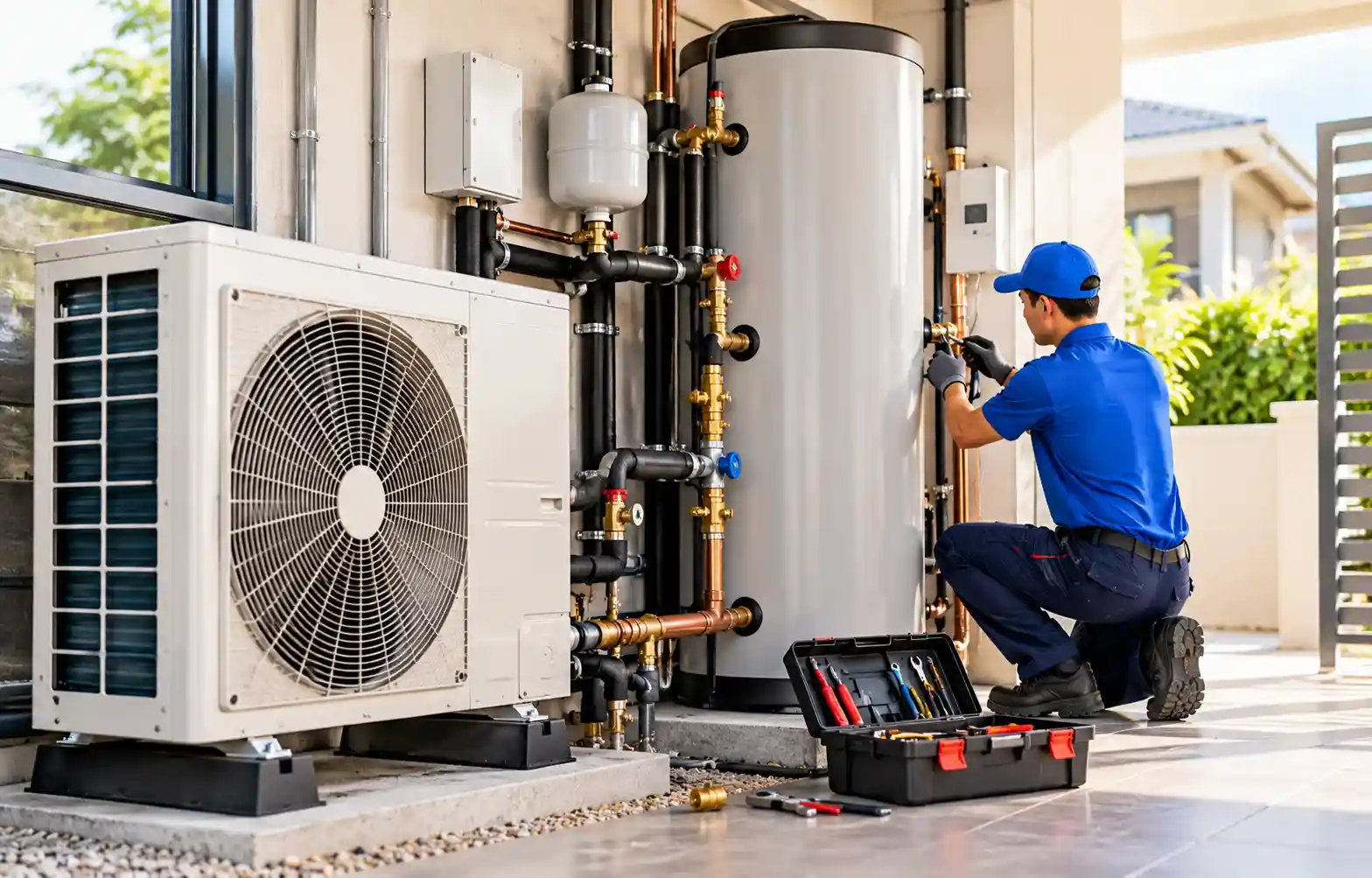
What Is a Heat Pump Water Heater?
A heat pump water heater uses heat from the surrounding air to heat water rather than relying entirely on direct electrical resistance heating. It uses a refrigeration cycle to transfer heat into the water through a heat exchanger.
A typical system includes an outdoor or ventilated heat pump unit, a hot water storage tank, connecting pipes, controls and safety components. Depending on the model, the heat pump and storage tank may be integrated or installed as separate units.
Because the system transfers heat instead of generating all the heat directly from electricity, it can provide more heat energy than the electrical energy it consumes under suitable operating conditions. Actual efficiency depends on the equipment, ambient temperature, water temperature setting, installation and usage pattern.
6 Benefits of Heat Pump Water Heaters
1. Potentially Lower Electricity Consumption
Heat pump water heaters can be more energy-efficient than conventional electric resistance water heaters. They move heat from the surrounding air into the water, which can reduce the electricity required to meet hot water demand.
Actual savings depend on the system selected, operating conditions, hot water usage and the performance of the existing water heater. Ask for model-specific efficiency information before making a decision.
2. Suitable for High Hot Water Demand
Heat pump systems are available in different capacities and configurations. Properly designed systems can support the hot water needs of apartment buildings, hotels, hospitals, gyms and other commercial facilities.
For larger properties, the system should be selected based on peak-hour demand, the required water temperature, storage capacity and recovery time.
3. Consistent Hot Water Supply
A correctly sized heat pump and storage tank can help meet regular hot water requirements throughout the day.
For properties with multiple bathrooms or several hot water outlets, system design should also consider pipe sizing, insulation, circulation and the distance between the plant room and the points of use.
4. A Practical Option for Residential and Commercial Buildings
Heat pump water heaters can be considered for independent homes, apartments, guest houses, hotels, healthcare facilities and suitable industrial applications.
The best configuration will depend on the available installation area, ventilation, noise considerations, water demand and existing plumbing infrastructure.
5. Can Support Energy-Efficiency Goals
For buildings that use substantial quantities of hot water, improving water-heating efficiency can be an important part of managing energy consumption.
The potential benefit should be assessed against the existing system, expected daily usage, equipment cost, installation requirements and maintenance needs.
6. Can Be Integrated with a Well-Designed Hot Water System
A heat pump is only one part of the overall installation. Correctly sized storage tanks, insulated pipes, suitable controls and an appropriately designed hot water circulation system can all contribute to overall system performance.
A site assessment helps identify the right combination for the building.
Quick Tip
Size your system for peak-hour hot water demand, not just daily usage. A correctly sized heat pump and storage tank give consistent hot water and better efficiency.
How Much Does a Heat Pump Water Heater Cost in Bangalore?
There is no single installation price that applies to every property. The total cost depends on the required capacity, equipment model, site conditions and the complexity of the installation.
Before comparing quotations, check what is included in the equipment price and what will be charged separately.
Key Factors That Affect Installation Cost
1. Hot water capacity
A small residential requirement and a large apartment or hotel requirement need different system capacities. Higher demand may require a larger unit, a larger storage tank or multiple units.
2. Equipment brand and model
Price varies by manufacturer, capacity, efficiency, controls, tank construction, operating specifications and warranty terms. Compare the technical specifications of the proposed models rather than choosing on price alone.
3. Plumbing and piping work
The installation may require hot and cold water connections, insulated piping, valves, drainage provisions and modifications to existing plumbing.
4. Installation location
The site may need a suitable foundation, equipment supports, adequate ventilation, safe access for servicing and appropriate electrical connections. Rooftop installations can have different requirements from ground-level or plant-room installations.
5. Hot water circulation requirements
Large buildings may need a hot water recirculation system to reduce the wait for hot water at distant outlets. The design, pump, controls and pipe insulation can affect the total project cost.
6. Electrical and additional work
Depending on the existing infrastructure, the project may require electrical upgrades, control wiring, safety devices, tank replacement or changes to the distribution system.
A site assessment helps identify the right combination for the building.
Planning a Heat Pump Water Heater in Bangalore?
Get a site assessment and a clear quotation based on your hot water demand, building type and installation space.